Your First Toolbox: The Essential Equipment for Most DIY Projects

Your First Toolbox: The Essential Equipment for Most DIY Projects
Starting your journey into DIY home projects doesn’t require a full workshop or a garage packed with tools. With a solid set of basics, you can handle most everyday tasks—from hanging shelves and assembling furniture to fixing small household issues. Here’s a guide to building your first toolbox and what to prioritize when you’re just getting started.
Begin with the Basics
A good toolbox starts with the tools you’ll reach for again and again. Focus on quality over quantity—tools that feel comfortable in your hand and are built to last.
- Hammer – Choose a medium-weight claw hammer with a comfortable grip. It’s perfect for driving nails, pulling them out, and handling small repairs.
- Screwdrivers – A set with both flathead and Phillips screwdrivers in various sizes will cover most needs.
- Pliers and wire cutters – Essential for gripping, bending, or cutting wires and nails.
- Tape measure and level – Accuracy is key for any project, whether you’re hanging pictures or building a bookshelf.
- Utility knife – A sharp, retractable knife is great for cutting cardboard, carpet, or packaging materials.
These few tools will take you far and form the foundation of a toolbox you can expand over time.
Screws, Bits, and Drill Accessories
Once you start assembling furniture or mounting brackets, you’ll quickly realize how much easier the right screws and bits make the job. Invest in a bit set with the most common types (Phillips, slotted, Torx), and keep a small assortment of screws, anchors, and nails in different sizes.
A drill bit set for both wood and metal is also a smart addition, especially if you own a power drill. It gives you the flexibility to drill holes, mount shelves, or make small repairs around the house.
Power Tools – Taking the Next Step
While hand tools can handle a lot, power tools make many tasks faster and more precise. You don’t need to buy everything at once—start with the most versatile options:
- Cordless drill/driver – A must-have for any home. Choose one with adjustable torque and multiple speed settings.
- Jigsaw – Ideal for cutting wood, laminate, or plastic with precision.
- Oscillating multi-tool – A compact tool that can sand, cut, and scrape—perfect for detailed work and small repairs.
When buying power tools, consider sticking with one brand so that batteries and chargers are interchangeable. It saves both money and storage space in the long run.
Storage and Organization
A toolbox is only useful if you can find what you need. A toolbox or tool bag with compartments helps keep everything organized. If you have the space, a rolling tool chest or pegboard wall in your garage or basement can make your setup even more efficient.
A simple habit—putting tools back in their place after each project—will save you time and frustration later.
Safety First
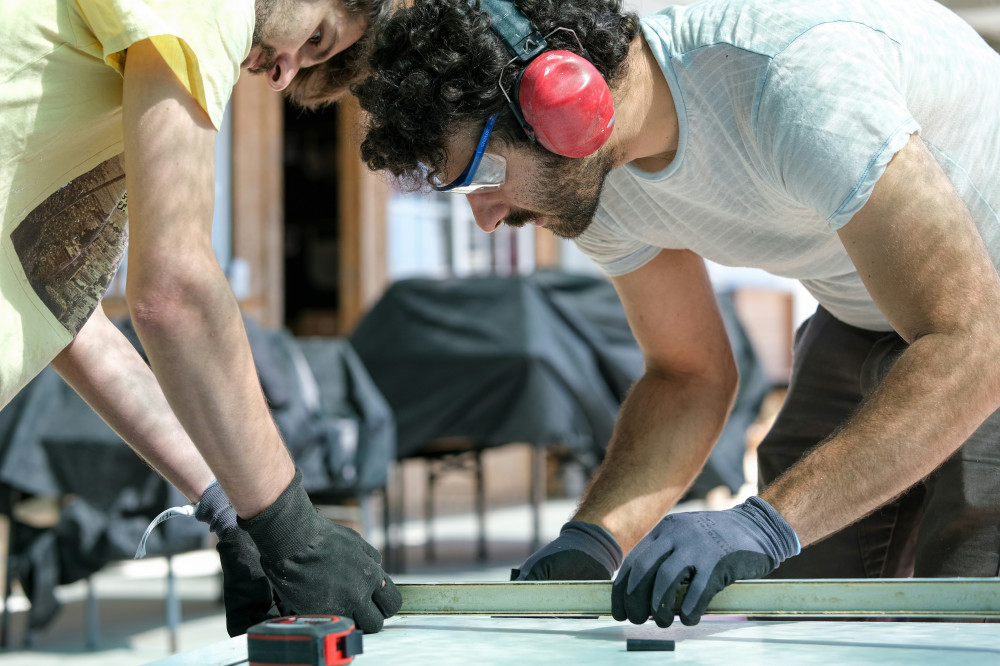
Even small projects can pose risks. Always keep work gloves, safety glasses, and hearing protection in your kit. These inexpensive items can prevent serious injuries.
If you’re using power tools, inspect cords and plugs for damage before use, and always follow the manufacturer’s safety instructions.
Læs også:

Build as You Go
As you gain experience, you’ll discover which tools you use most and where you might need to expand. Maybe you’ll add a pipe wrench, an angle grinder, or an impact driver down the road—but wait until you actually need them.
Your toolbox should grow with your skills. Start simple, choose quality tools, and build gradually. That way, you’ll end up with a set that fits your projects perfectly—and lasts for years to come.
Læs også: